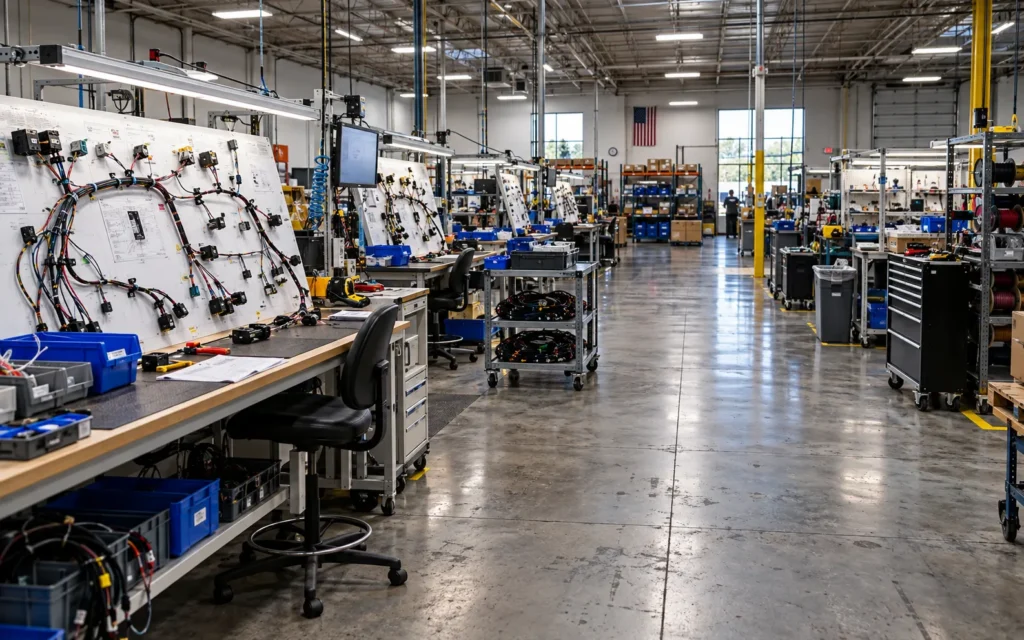
For years, the default advice for electronics sourcing was to find the lowest unit price, wherever it was. Wire harnesses were a natural fit for that thinking, since they are labor-intensive and easy to ship. But more product teams are now looking beyond unit price to total cost, and that changes the math. Here is why domestic wire harness manufacturing deserves a serious look.
Unit price is not total cost
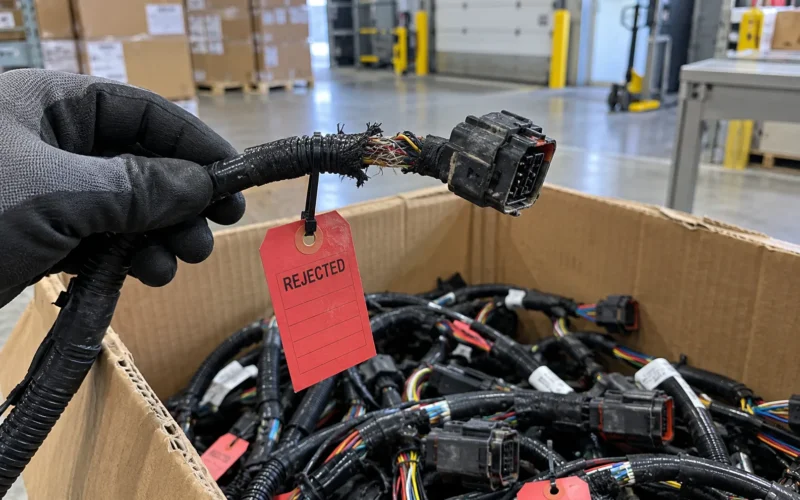
A quoted price per harness leaves out a lot. Freight, duties, longer inventory cycles, expediting fees, rework on returned units and the engineering time spent chasing answers across time zones all land somewhere on your books. When a shipment is late or a batch fails inspection, the cost is not just the harnesses. It is the production line waiting for them.
Communication that moves at the speed of your program
Harness programs rarely stay static. Drawings get revised, connectors go on allocation, and a design change late in development can ripple through the whole bill of materials. When your supplier is in your time zone and speaks your engineering language, a question in the morning can be resolved by the afternoon. That is hard to replicate when every exchange takes a day.
Shorter, more predictable lead times
Domestic production removes ocean freight, customs clearance and much of the variability that comes with them. That matters most for two kinds of work: fast-turn prototypes, where time is the whole point, and production programs that need to flex up or down as demand changes. Shorter supply lines also mean you can carry less safety stock.
Easier visibility and oversight
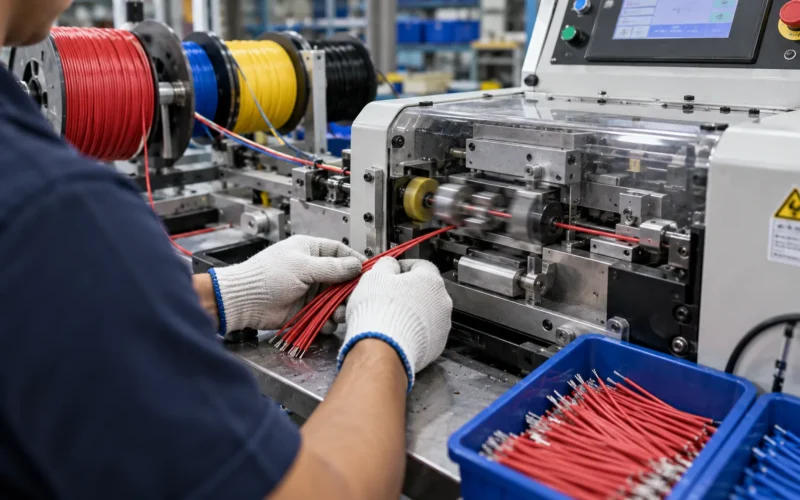
Being able to visit your supplier, walk the production floor and meet the people building your product builds confidence in a way that reports cannot. For programs with formal quality requirements, that access also makes audits and corrective action conversations far simpler.
Design collaboration, not just order taking
A supplier close to your engineering team can review drawings and BOMs early, flag manufacturability issues and suggest practical alternatives before you commit to production. Catching a hard-to-crimp terminal or an awkward branch layout during design is far cheaper than discovering it after a full build.
Protecting your intellectual property
Your drawings, BOMs and designs represent real investment. Working with a supplier under U.S. law gives many companies additional comfort about how that information is handled, which is especially relevant for startups with a novel product and for defense-adjacent programs.
Resilience when supply chains wobble
Recent years have shown how quickly global logistics can be disrupted. A domestic supplier does not make you immune to component shortages, but it does shorten the chain you have to manage and gives you more options when something goes wrong.
Where domestic makes the most sense
The advantage is greatest for programs with frequent design changes, tight schedules, low-to-moderate volumes, documentation or traceability requirements, or products where a field failure would be costly. If your design is frozen, your volumes are very high and your schedule is forgiving, the comparison may look different. It is worth running the numbers either way.
Domestic manufacturing is not always the lowest piece price, and it is not the right answer for every program. The point is to compare total cost and risk, not just the number at the bottom of a quote.
Questions to ask when comparing suppliers
- What does the total landed cost look like once freight, duties and inventory are included?
- How quickly can you get an engineering answer during a design change?
- What happens to lead time if my volume doubles or halves?
- Can I visit, and can I see how my assemblies are built and tested?
Harnex builds wire harnesses and cable assemblies in Michigan for OEMs and startups across industries. If you are weighing your options, send us a drawing and we will give you a quote you can compare on the full picture, not just the piece price.