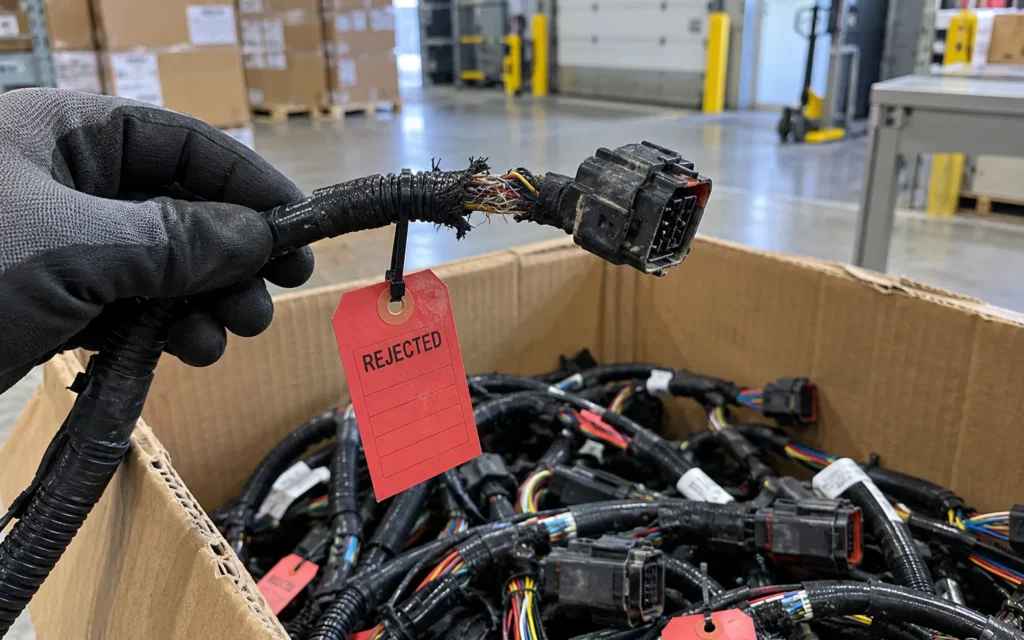
Most companies do not switch harness suppliers on a whim. Changing means requalifying parts, transferring documentation and taking on risk, so people tend to put up with a lot before they move. But a struggling supplier costs more than it seems. If several of these signs sound familiar, it may be time for an honest evaluation.
1. Late deliveries have become normal
An occasional late shipment happens to every supplier. A pattern is different. If you find yourself padding schedules, holding extra safety stock or expediting orders as a matter of routine, the supplier’s problems have become yours. Ask whether they can explain the cause and show a credible plan, or whether the answers keep changing.
2. Quality issues keep coming back
Every build can have a defect. What matters is what happens next. A good supplier finds the root cause, fixes the process and tells you what changed. A concerning one sends replacement units and the same problem returns. Repeated incoming inspection failures, returned units or field failures traced to workmanship are a strong signal that process controls are weak.
3. Communication has gone quiet
Do you know who to call when something goes wrong? Are questions answered promptly, and are engineering changes handled clearly? When emails sit unanswered and quotes take weeks, you are spending your own time managing the relationship. A responsive team with real people who know your program is worth more than a slightly lower price.
4. Pricing surprises and hidden costs
Quotes that do not match invoices, unexplained surcharges, or expedite fees for schedules you agreed to are all warning signs. So is a quote that looks great and then grows through change orders. Predictable, transparent pricing makes budgeting possible and reflects a supplier who understands their own costs.
5. They cannot grow or adapt with you
Your needs change. You may need quick-turn prototypes for a new product, higher volume for a successful one, or additional Capabilities such as overmolding, testing or box build. If your supplier cannot support the next stage, or treats every request as an inconvenience, you will eventually outgrow them. The same applies if they offer no engineering input and simply build whatever is put in front of them.
Why these problems develop
Suppliers rarely fail overnight. A key person leaves, the shop takes on more work than it can handle, purchasing gets stretched, or growth outpaces process. From your side, it shows up as small slips that gradually become the norm. Recognizing the pattern early gives you time to respond calmly instead of in the middle of a shortage.
If you would hesitate to give this supplier your next new program, that hesitation is worth listening to.
What to do if you recognize these signs
- Document the issues. Gather delivery records, quality reports and communication history so the conversation is based on facts.
- Raise them directly. Give your supplier a chance to respond. A strong partner will engage; a weak one will deflect.
- Get a second quote. Sending your current drawings and BOM to another manufacturer is low-risk and shows you what the market offers.
- Start with a pilot. If you do move, begin with a single assembly or a small batch rather than the whole program.
- Protect continuity. Keep enough inventory to cover the transition and confirm all drawings and revision history are current.
Switching is easier than it sounds
A well-organized supplier can review your existing drawings and BOM, flag anything unclear and propose a transition plan with minimal disruption. If your current arrangement is not working, send us your print and a description of what has gone wrong. We will review it and let you know what we would build, how we would test it and what a realistic timeline looks like.